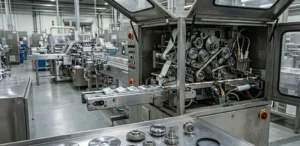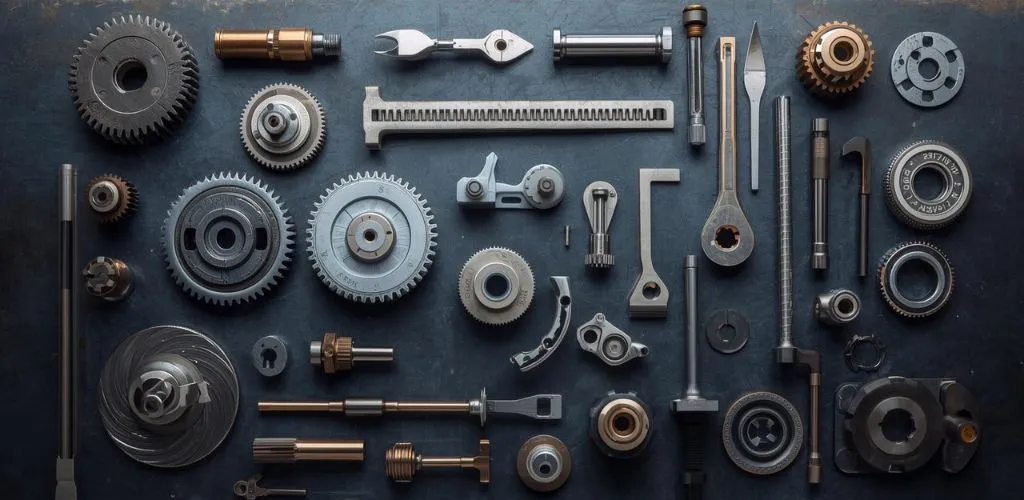
Knowing how to buy GD packer parts correctly is one of the most important decisions a procurement team makes for their packing line — the wrong part, wrong supplier, or wrong process costs far more than the part itself. Whether you are building a maintenance inventory or sourcing an emergency replacement, buying GD packer parts requires more care than purchasing general industrial components. The wrong part — wrong tolerance, wrong material, wrong model fit — does not just fail to solve the problem. It can create a new one.
This guide covers everything industrial buyers need to know about GD packing machine spare parts sourcing — from confirming the right part for your machine to qualifying the supplier and avoiding the most common purchasing mistakes.
Step 1 — Identify Your Exact GD Machine Model Before Anything Else
GD (Sasib) has produced cigarette packing machines across multiple generations and model variants. The component configurations differ between models — a part that fits one GD machine may not fit another, even if the machines look similar externally. Before contacting any supplier, confirm the following:
- Exact GD machine model name and number
- Machine generation or year of manufacture where available
- Serial number — this is the most reliable identifier when model documentation is unclear
- Part reference number from the machine’s technical documentation or parts diagram
If you do not have the part reference number, a photograph of the worn component alongside its location in the machine is the next best option. A supplier with genuine technical knowledge of GD packing systems should be able to identify the component from this information.
Step 2 — Know Which GD Parts You Actually Need
Not all GD packer components have the same replacement frequency. Understanding which parts wear fastest helps you prioritize what to stock and what to source on demand. Here are the components that industrial buyers most frequently need to replace on GD packing machines:
| Component | Why It Wears | Replacement Frequency |
| Cutting Knife & Blade Set | Constant high-speed web cutting causes dulling and chipping | High — planned schedule |
| Glue Wheel & Glue Assembly | Heat, friction, and adhesive exposure degrade surface and flow | High — monitor closely |
| Malta Wheel | Continuous intermittent motion causes locking profile wear | Medium — inspect regularly |
| Cam Assemblies | Profile wear from continuous high-speed operation | Medium — check each service |
| Bobbin Wheel | Friction from web unwinding causes surface degradation | Medium — planned schedule |
| Belt Replacement Set | Stretch and surface wear from continuous drive operation | High — consumable item |
| Fixed Overlap Device | Wear causes inconsistent wrap geometry and seal failures | Medium — inspect regularly |
| Glue Container Set | Heat and chemical exposure over time | Low-Medium — condition based |
Browse the full GD packer spare parts catalog to check availability on all components listed above.
Step 3 — Qualify the GD packer parts supplier Before You Place the Order
GD packer spare parts quality varies significantly between suppliers — and the difference only becomes visible when a component fails prematurely on your production line. Not all spare parts suppliers operate at the same standard. Here is what to verify before committing to any GD packer parts purchase:
Do They Manufacture In-House?
The most important question. An in-house manufacturer controls material selection, machining, and quality inspection at every stage. A reseller sources from wherever is cheapest at the time — meaning batch quality varies and traceability is limited. For high-speed packing machine components, that variability has direct consequences on your production output.
Can They Confirm Dimensional Conformance?
GD packing machines operate with tight synchronization across all assemblies. A replacement part that deviates from original dimensional specifications — even marginally — can cause timing errors, increased wear on adjacent components, and reduced output quality. Ask your supplier whether they verify dimensional conformance and whether inspection records are available.
What Material Do They Use?
Cutting knives, Malta wheels, and cam assemblies must be manufactured from specific material grades to withstand the operational demands of high-speed production. A supplier who cannot specify the material used — or who uses general-purpose alloys for tooling applications — is not equipped to supply components for a GD packing line.
Is the Part in Stock or Made to Order?
For planned maintenance this distinction matters less. For unplanned stoppages it matters enormously. Always ask your supplier which GD packer components they hold in ready stock and which require production lead time. A supplier who is honest about this — and gives realistic lead times, not optimistic ones — is far more valuable than one who promises fast delivery and then delays.
Can They Handle Custom or Discontinued Parts?
Older GD machine variants frequently require components that are no longer available through standard OEM channels. A supplier with custom manufacturing capability can produce these parts from technical drawings or sample components. Orchid’s Diagram to Spare Parts service is specifically designed for this situation — ensuring your older GD machines can stay in production without being forced into early retirement.
Step 4 — Decide Between OEM and Third-Party Sourcing
Many procurement teams default to OEM sourcing without evaluating whether it is actually the best option for their situation. Here is a straightforward way to think about it:
| Your Situation | Recommended Approach |
| Your GD machine is newer and under active OEM support | OEM is a reasonable choice — support is available and lead times are manageable |
| Your GD machine is 10+ years old | Third-party is often more practical — OEM support diminishes as machines age |
| You need a part urgently and cannot wait 4–6 weeks | Third-party with ready stock is the only viable option |
| A component has been discontinued by the OEM | Third-party custom manufacturing is the only option |
| You are ordering high-wear consumables in bulk | Third-party competitive pricing makes bulk ordering more cost-effective |
For a deeper look at why many tobacco manufacturers are reducing OEM dependency, read our guide on moving away from OEM-only spare parts sourcing.
Step 5 — Build a Forward Stock for Your GD Packing Line
Understanding how to source GD packer spare parts proactively — rather than reactively — is the single most effective way to protect your production line from unplanned downtime.
The most effective way to protect your GD packing line from unplanned downtime is to stop sourcing reactively. A forward stock of critical components — sized to cover at least one full replacement cycle for your highest-wear items — eliminates emergency sourcing pressure and reduces the risk of extended stoppages.
Start by identifying the components on your GD machine that have the shortest replacement intervals. Cutting knives, belts, and glue wheels are typically at the top of this list. Order these in sufficient quantity to maintain at least one spare set in inventory at all times.
Orchid Spare Parts supports bulk and custom orders for GD packing machine components, with competitive pricing for facilities consolidating procurement. We also supply spare parts for other cigarette packing machines including the HLP series and Focke & Co equipment — making it practical to consolidate your entire packing line procurement through a single qualified supplier.
GD Packer Parts: Pre-Order Checklist
Before placing any GD packer parts order, confirm the following:
- GD machine model, generation, and serial number confirmed
- Part reference number identified from machine documentation or diagram
- Supplier confirmed as in-house manufacturer — not a reseller
- Material grade confirmed for high-wear components
- Dimensional conformance documentation available on request
- Stock availability confirmed — and lead time given for made-to-order items
- Custom manufacturing available for discontinued or hard-to-find components
- Shipping terms, packaging standards, and delivery timeline confirmed