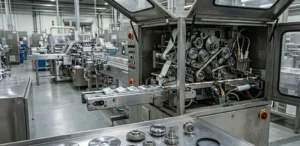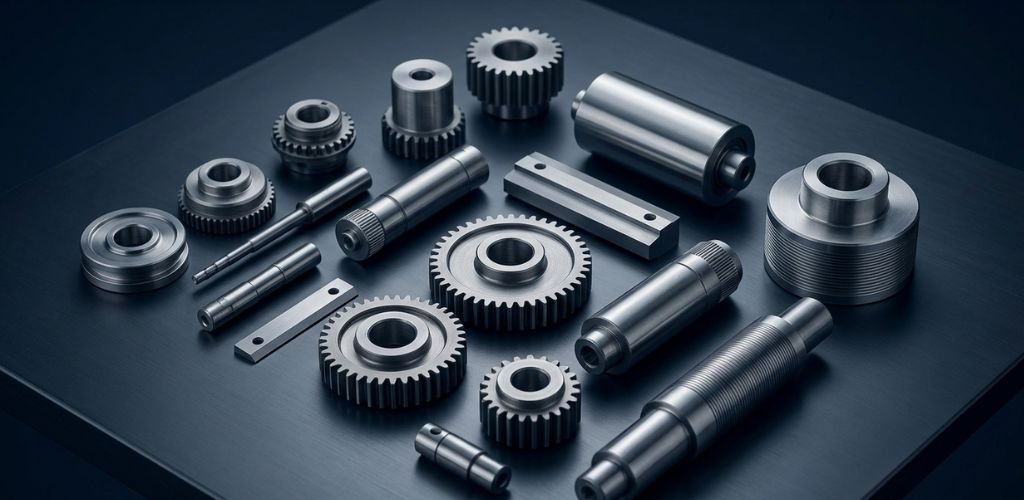
Knowing how to choose an HLP spare parts supplier is one of the most important decisions a maintenance engineer or procurement manager makes for their production line. The HLP packing machine runs at speeds of up to 250 packs per minute, and every component inside it must perform to exact specifications. The supplier you choose determines whether your line runs smoothly or faces repeated stoppages from inconsistent, out-of-tolerance, or delayed components.
This guide walks you through exactly what to look for, what questions to ask, and what red flags to avoid when choosing an HLP spare parts supplier, whether you are qualifying a new vendor or reconsidering an existing one.
Why Choosing the Right HLP Spare Parts Supplier Matters
The HLP packing machine is a high-speed, high-precision system. Every component, from the gummer unit to the cutter creaser to the cigarette turret — operates within tight tolerances and in close coordination with adjacent parts. A replacement component that is even slightly out of spec does not just underperform. It creates problems across the entire packing sequence — increased rejects, premature wear on surrounding components, and eventually unplanned downtime.
This is why the supplier you choose for your HLP Cigarette packing machine spare parts matters far more than the price per unit. The cost of one failed component — in downtime, rejects, and secondary damage, will far exceed any savings made on a cheaper part from an unqualified supplier.
Key Criteria to Evaluate an HLP Spare Parts Supplier
When evaluating any HLP spare parts supplier, these are the criteria that matter most:
1. In-House Manufacturing Capability
The first and most important question to ask any HLP spare parts supplier is whether they manufacture components in-house or source from third-party vendors and resell. An in-house manufacturer controls material selection, machining tolerances, surface finishing, and quality inspection at every stage. A reseller has no control over any of it — meaning batch quality varies unpredictably and traceability is limited.
For a machine running at 250 packs per minute, that variability has direct and immediate consequences on your production output. Always choose a supplier who manufactures the components they sell.
2. Knowledge of HLP Machine Variants
The HLP series includes multiple variants, the HLP 180, HLP 225, and HLP 250, each with specific component configurations. Parts are not always interchangeable across variants. A supplier who genuinely knows the HLP machine range will ask you which variant you are running before quoting any component. A supplier who does not ask this question is not equipped to support your line.
3. Dimensional Conformance Against Original Specifications
Every HLP component is manufactured to a defined set of dimensional specifications. A qualified supplier verifies that their replacement parts conform to those specifications through measurement and inspection — not just visual checks. Ask whether dimensional conformance documentation is available and whether the supplier can demonstrate conformance against original part drawings or reference samples.
4. Material Grade Transparency
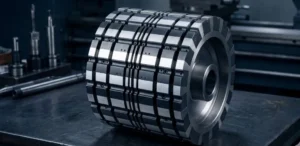
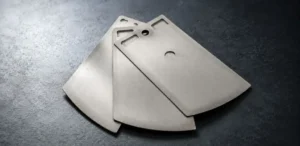
High-wear HLP components, cutter creasers, gummer wheels, eccentric bushes, must be manufactured from specific material grades to survive continuous high-speed operation. A qualified supplier should be able to tell you exactly what material was used in any given component and why that material is appropriate for the application. If they cannot answer this question clearly, do not place the order.
5. Stock Availability and Lead Time Transparency
A reliable HLP spare parts supplier clearly distinguishes between components held in ready stock and those manufactured to order. For planned maintenance this distinction is manageable. For an unplanned breakdown it is critical. Ask your supplier exactly which HLP components they hold in stock and which require production lead time, and get realistic timelines, not optimistic ones that slip.
6. Custom Manufacturing for Discontinued Parts
Older HLP machine variants frequently require components that are no longer available through OEM channels. A supplier with genuine custom manufacturing capability can produce these parts from technical drawings or sample components. Orchid’s Diagram to Spare Parts service was built specifically for this situation, ensuring your HLP line stays operational without being forced into early retirement.
7. Quality Assurance Documentation
A qualified HLP spare parts supplier should be able to provide documentation confirming material origin, production standards, and inspection results on request. This is particularly important for facilities operating within audited or regulated production environments. Review Orchid’s quality assurance standards to understand how we maintain consistency across every component we manufacture.
HLP 180 vs HLP 225 vs HLP 250: Does Your Supplier Know the Difference?
This is one of the most reliable ways to test a supplier’s technical competence before placing an order. The HLP 180, HLP 225, and HLP 250 are distinct machine variants with different speed capabilities and in some cases different component specifications. A supplier who genuinely knows the HLP range will:
- Ask which HLP variant you are running before confirming part compatibility
- Be able to explain which components differ between variants and which are shared
- Confirm part reference numbers against your specific machine model
- Flag any compatibility concerns before the order is placed, not after delivery
A supplier who quotes any HLP component without first confirming your machine variant is either guessing or treating all HLP machines as identical — both of which represent an unacceptable risk for your production line.
Red Flags to Watch For When Evaluating a Supplier
Beyond the positive criteria, these warning signs should make any procurement team cautious:
| Red Flag | What It Means |
| Does not ask which HLP variant you run | They do not understand the machine range |
| Cannot specify material grade used | Quality and longevity of parts is unknown |
| Unusually low prices with no explanation | Likely using substandard materials or reselling |
| Vague or shifting lead times | They do not hold stock and manufacture opportunistically |
| No quality documentation available | No controlled production process in place |
| Claims to supply all brands and machines | Nobody manufactures everything — likely a trader |
| Cannot work from diagrams or drawings | Limited technical capability for custom or legacy parts |
Questions to Ask Before Placing Your First Order
Use these questions to qualify any HLP spare parts supplier before committing to a purchase:
- Do you manufacture HLP spare parts in-house or source from third parties?
- Which HLP variants do you have experience supplying — HLP 180, HLP 225, or HLP 250?
- Can you confirm dimensional conformance against original HLP specifications?
- What material grade do you use for components like cutter creasers and gummer wheels?
- Which HLP components do you hold in ready stock right now?
- What is your lead time for components that are not in stock?
- Can you manufacture parts from technical diagrams or sample components?
- What quality documentation can you provide on request?
- What are your shipping terms and packaging standards for international orders?
HLP Spare Parts Supplier Checklist
Use this checklist when making your final supplier decision:
- Confirmed as in-house manufacturer, not a reseller
- Demonstrates knowledge of HLP 180, HLP 225, and HLP 250 variants
- Verifies dimensional conformance against original specifications
- Specifies material grade for all high-wear components
- Provides clear stock availability and realistic lead times
- Offers custom manufacturing for discontinued or hard-to-find parts
- Provides quality assurance documentation on request
- Has clear shipping terms and packaging standards for your region
- Can identify parts from reference numbers, diagrams, or photographs
For a broader look at supplier evaluation across all tobacco machinery, read our guide on how to find a reliable tobacco machine spare parts supplier.
Why Orchid Spare Parts Is a Qualified HLP Spare Parts Supplier
Orchid Spare Parts manufactures HLP spare parts in-house using controlled CNC production processes and high-grade materials selected specifically for compatibility with HLP machine operational demands. We supply components for the HLP 180, HLP 225, and HLP 250, and our team can identify and confirm part compatibility based on your specific machine variant before any order is placed.
We also support bulk and custom orders for facilities looking to build forward maintenance stock, and our Diagram to Spare Parts service handles discontinued or hard-to-find HLP components from technical drawings. For facilities running multiple packing machine brands, we also supply parts for GD Packer, Focke & Co, and other cigarette packing machines.