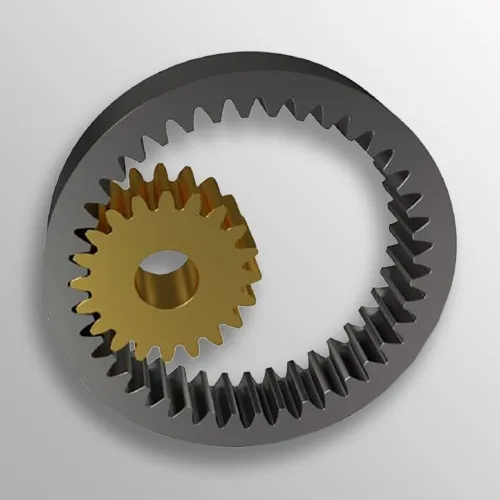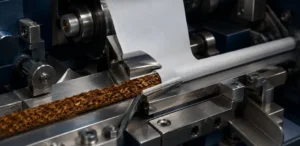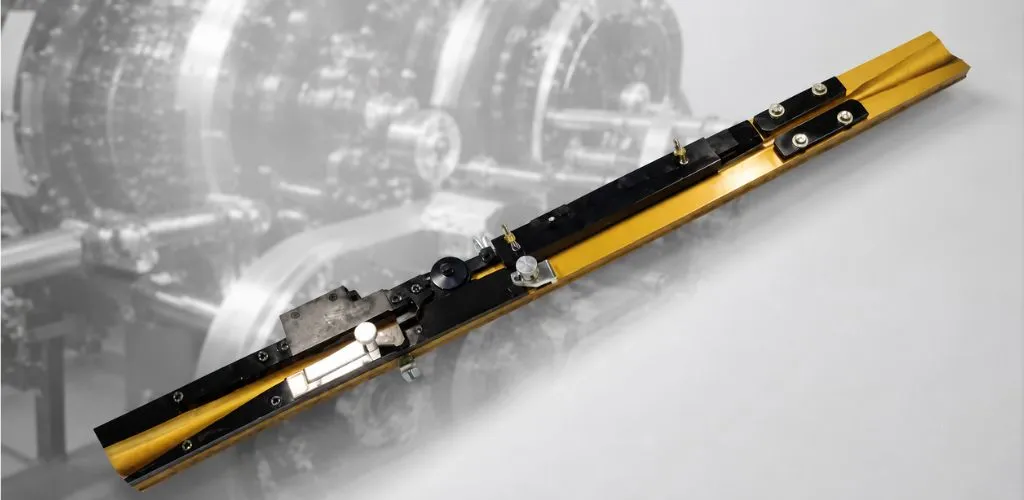
Garniture Assembly is one of the most critical components in a cigarette making machine — responsible for shaping the continuous tobacco rod during high-speed production. Without a functioning Garniture Assembly, a cigarette making machine cannot produce a consistently formed rod, which means every cigarette coming off the line is at risk of being out of specification.
Despite its importance, the garniture assembly is also one of the most frequently replaced components on any cigarette making machine. Understanding what it does, why it wears, and when to replace it is essential knowledge for every maintenance engineer managing a tobacco production line. This guide covers all of that — and explains how to source a quality garniture assembly replacement when the time comes.
What is Garniture Assembly?
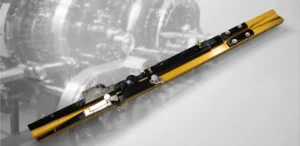
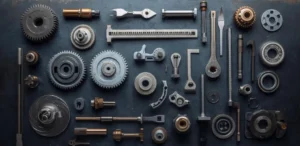
A garniture assembly is the section of a cigarette making machine that forms the tobacco rod. It consists of a series of precisely shaped components — including the tongue, short folder, long folder, and garniture bed — that work together to wrap cigarette paper around a continuous stream of tobacco, forming it into a consistent cylindrical rod.
The process works like this: the tobacco stream is deposited onto a moving paper web, which is then guided through the garniture assembly. As the paper moves through the garniture, it is progressively folded and shaped around the tobacco — first into a U-shape, then into a closed cylinder. Adhesive is applied to seal the paper edge, forming the continuous tobacco rod that is then cut into individual cigarettes downstream.
The garniture assembly operates continuously at very high speeds — on some machines producing up to 20,000 cigarettes per minute. Every millimeter of tobacco rod that passes through the machine passes through the garniture assembly. This is why the condition of the garniture assembly has such a direct and immediate impact on cigarette quality.
Which Cigarette Making Machines Use a Garniture Assembly?
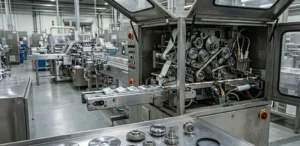
The garniture assembly is a standard component across all continuous-rod cigarette making machines. The most common machines that use a garniture assembly include:
| Machine | Manufacturer | Notes |
| Protos 70, 80, M5, M8 | Hauni / Körber | Most widely deployed cigarette maker globally |
| Molins Mark 8 | Molins | Legacy machine — still widely operational |
| Molins Mark 9 | Molins | Higher speed variant — different garniture spec |
| MAX Series | Hauni / Körber | High-speed modern variant |
Important: Garniture assembly specifications differ between machine models and sometimes between machine generations. Always confirm your exact machine model before ordering a replacement garniture assembly.
Why Does a Garniture Assembly Wear Out?
The garniture assembly wears out because of the extreme conditions it operates under. Understanding the causes of wear helps maintenance engineers anticipate replacement timing and avoid the quality problems that a degraded garniture causes.
1. Constant Friction at High Speed
The garniture assembly is in constant contact with the moving paper web and tobacco stream — at speeds of up to 20,000 cigarettes per minute. This continuous friction between the garniture surfaces and the moving paper generates heat and causes gradual surface wear on the tongue, folders, and garniture bed. Over time this wear changes the dimensional profile of the garniture — causing the rod it forms to deviate from specification.
2. Abrasion from Tobacco Particles
Tobacco is an abrasive material. Fine tobacco particles constantly pass through the garniture assembly during production, gradually abrading the internal surfaces of the garniture components. This abrasion is accelerated when running coarser tobacco blends or when tobacco moisture levels are outside the optimal range. The result is dimensional loss in the garniture profile — leading to rod circumference inconsistency.
3. Heat Buildup
High-speed operation generates significant heat in the garniture region. Sustained heat causes expansion and contraction of garniture components, which over time leads to dimensional changes and surface fatigue. On machines without adequate cooling or lubrication, heat-related wear accelerates significantly.
4. Adhesive Contamination
The paper seam adhesive applied during rod formation can contaminate the garniture surfaces if the glue system is not properly adjusted or maintained. Adhesive buildup on the garniture bed or tongue causes the paper web to drag, creates tension inconsistencies, and accelerates surface wear. Regular cleaning is essential to prevent adhesive-related garniture damage.
Signs Your Garniture Assembly Needs Replacing
A worn garniture assembly produces clear warning signs before it fails completely. Maintenance engineers should watch for the following indicators:
- Cigarette circumference out of specification — The most direct indicator — if the rod diameter is inconsistent across the production run, the garniture profile has worn beyond tolerance.
- Increased reject rate — A worn garniture causes irregular rod formation — leading to loose ends, soft spots, and weight variations that trigger the machine’s rejection systems.
- Paper wrinkles or fold defects — If the paper web is not being guided smoothly through the garniture, wrinkles, creases, or fold defects appear on the finished cigarette. This is a sign the garniture surfaces are worn or contaminated.
- Rod hardness inconsistency — If some cigarettes feel noticeably softer or harder than others from the same production run, the garniture is no longer forming the rod to a consistent profile.
- Increased web breaks — A worn or damaged garniture creates irregular tension on the paper web, increasing the frequency of web breaks and production stoppages.
- Unusual noise or vibration from the garniture region — Mechanical noise or vibration from the garniture section during operation is a sign of wear or damage to the garniture assembly components.
If any of these signs are present, the garniture assembly should be inspected immediately and replaced if wear is confirmed. Running a degraded garniture assembly does not just produce out-of-spec cigarettes — it also accelerates wear on adjacent components including the garniture tape and suction bands, increasing the overall cost of the failure.
How a Worn Garniture Assembly Affects Cigarette Quality
The garniture assembly directly controls three critical cigarette quality parameters — circumference, firmness, and fill weight distribution. When the garniture wears, all three are affected:
| Quality Parameter | Effect of Worn Garniture | Production Impact |
| Circumference | Rod diameter becomes inconsistent | Increased rejects, pack fit issues |
| Firmness | Rod compression becomes uneven | Soft spots, hard spots in finished cigarettes |
| Fill Weight | Tobacco distribution becomes irregular | Weight variation triggers rejection systems |
| Paper Seal | Fold quality deteriorates | Open seams, loose ends, appearance defects |
How to Source a Replacement Garniture Assembly
When replacing a garniture assembly, the quality of the replacement component is as important as the timing of the replacement. A garniture assembly that is dimensionally out of specification — even slightly — will reproduce the same quality problems as a worn one. Here is what to verify before ordering:
- Confirm your exact machine model and generation — garniture specifications differ between Protos variants, Mark 8 and Mark 9, and other machines
- Verify the supplier manufactures garniture assemblies in-house — not resells from unknown sources
- Ask whether dimensional conformance is verified against original machine specifications
- Confirm the material grade used — garniture components must be manufactured from materials appropriate for continuous high-speed friction applications
- Check lead time — a quality garniture assembly supplier should hold common variants in ready stock
Orchid Spare Parts manufactures garniture assemblies for all major cigarette making machines including the Protos, Molins Mark 8, and Molins Mark 9. Each assembly is manufactured to dimensional specifications matched to the original machine design.
If you are working with legacy machine documentation or cannot locate a current part reference, our Diagram to Spare Parts service can manufacture a replacement garniture assembly from a technical drawing or sample component.
Related Components: What to Check When Replacing a Garniture Assembly
When a garniture assembly wears to the point of replacement, the components that work alongside it should also be inspected — as garniture wear accelerates wear on adjacent parts:
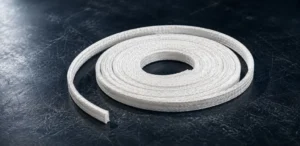
- Garniture Tapes — Work directly with the garniture assembly to guide and compress the rod. Worn garniture tapes often accompany a worn garniture assembly.
- Suction Bands — Transport the tobacco stream toward the garniture. Wear causes air leakage and inconsistent tobacco delivery to the garniture.
- Cut-Off Knife — Cuts the formed rod into individual cigarettes. A worn garniture produces irregular rod density which accelerates knife wear.