Cigarette rod formation problems are one of the most common — and most disruptive — issues on any cigarette making machine production line. When the tobacco rod is not forming correctly, the impact is immediate: reject rates increase, fill weight goes out of specification, machine alarms trigger, and output drops. In severe cases the line is forced to stop entirely while the root cause is identified and resolved.
This guide covers how to fix cigarette rod formation issues — explaining the most common causes, symptoms to identify them by, and the exact fix for each one. It also explains which components are most likely responsible. For a deeper look at individual components, see our related guides on Garniture Assembly and Suction Band.
What Is Cigarette Rod Formation and Why Does It Go Wrong?
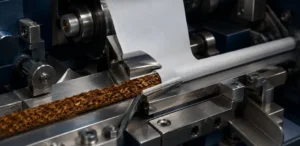
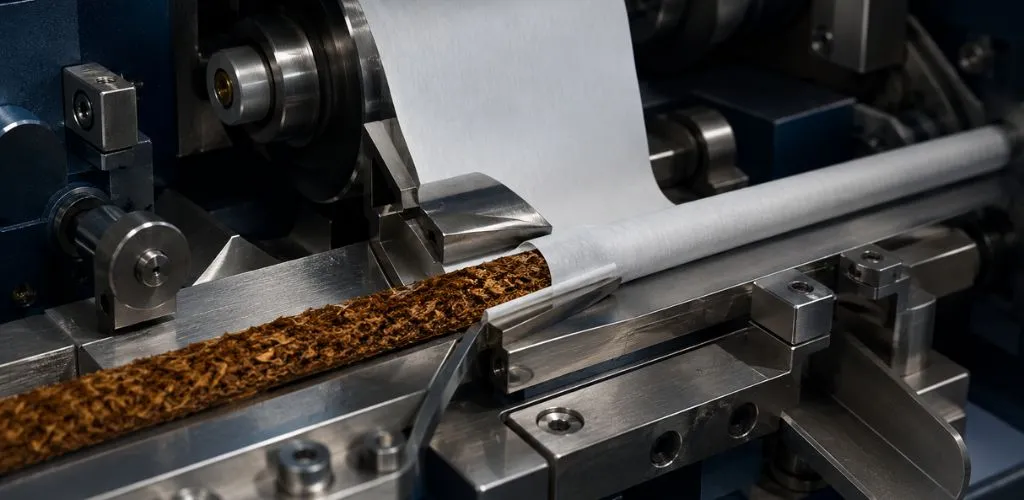
The cigarette rod is formed through a continuous process in which a stream of cut tobacco is transported by the suction band, leveled by trimmers, deposited onto a paper web, and then shaped into a cylindrical rod by the garniture assembly. Adhesive is applied to seal the paper edge, and the rod is then cut into individual cigarettes by the cut-off knife.
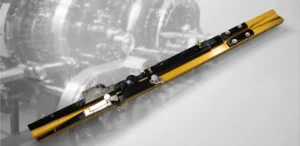
The garniture assembly rod formation process is the most critical stage in this sequence — any wear on the garniture tongue, folders, or bed directly affects the shape and consistency of every cigarette produced. Similarly suction band rod formation issues are among the most common causes of fill weight variation — when suction efficiency drops, tobacco delivery becomes inconsistent before it even reaches the garniture.
Every stage of this process depends on components working correctly and in tight coordination with each other. When any single component in the rod formation sequence degrades — whether the suction band, the garniture assembly, the garniture tapes, or the cut-off knife — the rod quality suffers. The challenge for maintenance engineers is identifying which component is responsible for the problem they are seeing on the line.
Common Cigarette Rod Formation Problems, Their Causes and Fixes
The following are the most frequently occurring rod formation problems on cigarette making machines — each with its likely cause, symptoms to watch for, and the recommended fix:
1. Inconsistent Rod Circumference
| Symptom | Rod diameter varies across the production run — some cigarettes are too thick, others too thin. Circumference measurement alarms trigger frequently. |
| Most Likely Cause | Worn Garniture Assembly. When the garniture tongue, folders, or bed wear beyond tolerance, the paper is no longer shaped around the tobacco consistently — causing circumference variation. |
| Secondary Cause | Incorrect garniture tape tension or a worn garniture tape causing irregular paper guidance through the garniture. |
| Fix | Inspect the garniture assembly for visible wear on the tongue and bed surfaces. If wear is confirmed, replace the garniture assembly. Also inspect garniture tapes for stretch or fraying. |
Related component: Garniture Assembly | Garniture Tapes
2. Fill Weight Variation
| Symptom | Fill weight varies across cigarettes in the same production run — triggering electronic weight control alarms and increasing reject rates. |
| Most Likely Cause | Worn or degraded Suction Band. When suction efficiency drops due to worn perforations or surface damage, tobacco is not delivered to the garniture at a consistent rate — causing fill weight variation. |
| Secondary Cause | Blocked or partially blocked suction box reducing airflow to the band. Also check trimmer condition — worn trimmers fail to level the tobacco stream consistently. |
| Fix | Inspect the suction band for perforation wear, surface damage, and contamination. Replace if suction efficiency has dropped. Clean the suction box and check airflow. Inspect and replace trimmer blades if worn. |
Related component: Suction Bands
3. Open Seam or Poor Paper Seal on the Rod
| Symptom | The paper seam on finished cigarettes is open, poorly sealed, or visibly misaligned. Cigarettes feel soft or fall apart at the seam when handled. |
| Most Likely Cause | Worn Garniture Assembly — specifically the long folder or tongue, which controls the final paper overlap before sealing. Wear on these surfaces causes the paper edge to misalign before the adhesive bonds. |
| Secondary Cause | Incorrect or inconsistent adhesive application from the glue system. If the adhesive is not reaching the seam at the right point and volume, even a good garniture cannot produce a clean seal. |
| Fix | Inspect the garniture tongue and long folder for wear. Replace the garniture assembly if wear is confirmed. Separately check the glue system — nozzle condition, adhesive temperature, and flow volume. |
Related component: Garniture Assembly
4. Ragged or Uneven Cut Ends on Cigarettes
| Symptom | Cigarettes have rough, torn, or uneven cut ends rather than clean straight cuts. Paper fibres are visible at the cut end and tobacco falls out easily. |
| Most Likely Cause | Worn or dull Cut-Off Knife. The cut-off knife performs thousands of cuts per minute — blade dulling or micro-chipping causes dragging rather than clean cutting, producing ragged ends. |
| Secondary Cause | Incorrect knife timing or knife gap setting. Even a sharp knife produces ragged cuts if the timing or clearance is out of specification. |
| Fix | Inspect the cut-off knife blade condition. Replace if dulling or chipping is confirmed. After replacement verify knife timing and gap setting against machine specification. |
Related component: Cut-Off Knife
5. Paper Wrinkles or Fold Defects on the Rod
| Symptom | Visible wrinkles, creases, or folds appear on the paper surface of finished cigarettes. The paper looks uneven or puckered around the rod. |
| Most Likely Cause | Worn Garniture Tapes. If the garniture tape has stretched, frayed, or lost surface integrity, it no longer guides the paper web smoothly through the garniture — causing the paper to bunch or fold. |
| Secondary Cause | Contamination on the garniture bed surface — adhesive buildup or tobacco particle deposits cause the paper web to drag unevenly as it passes through. |
| Fix | Inspect garniture tapes for stretch, fraying, and surface wear. Replace if any of these are confirmed. Clean the garniture bed thoroughly to remove adhesive and tobacco contamination. |
Related component: Garniture Tapes | Garniture Assembly
6. Frequent Web Breaks
| Symptom | The paper web breaks repeatedly during production — forcing machine stops for re-threading. Web breaks occur at irregular intervals without a consistent pattern. |
| Most Likely Cause | Worn Suction Band causing irregular web tension as the paper is pulled through the garniture. Also check the bobbin holder condition — misalignment causes uneven web tension from the paper supply side. |
| Secondary Cause | Worn garniture tapes causing friction spikes as the web passes through the garniture — creating tension peaks that exceed the paper’s tensile strength. |
| Fix | Inspect suction band for wear and replace if suction efficiency has dropped. Check bobbin holder alignment and condition. Inspect garniture tapes and replace if worn. |
Related component: Suction Bands | Garniture Tapes
Quick Reference: Rod Formation Problems and Responsible Components
Use this table as a quick diagnostic reference when identifying cigarette rod formation defects and problems on your production line:
| Problem Observed | Primary Suspect Component | Secondary Suspect |
| Inconsistent circumference | Garniture Assembly | Garniture Tapes |
| Fill weight variation | Suction Band | Trimmer blades |
| Open seam / poor seal | Garniture Assembly | Glue system |
| Ragged cut ends | Cut-Off Knife | Knife timing |
| Paper wrinkles / folds | Garniture Tapes | Garniture bed contamination |
| Frequent web breaks | Suction Band | Bobbin Holder / Garniture Tapes |
Which Machines Are Most Affected by Rod Formation Problems?
Cigarette rod formation problems can occur on any continuous-rod cigarette making machine. The most commonly affected machines include the Protos series from Hauni/Körber — particularly the Protos 70, 80, M5, and M8 — and the Molins Mark 8 and Molins Mark 9. All of these machines use the same fundamental rod formation process — suction band, garniture assembly, garniture tapes, and cut-off knife — making the diagnostic approach above applicable across all platforms.
Rod formation problems tend to appear more frequently on older machines where components have accumulated significant wear across millions of production cycles. Facilities running legacy equipment should maintain particularly close attention to the condition of their garniture assemblies and suction bands — and should stock replacement components in advance rather than waiting for failure to occur.
How to Fix and Prevent Cigarette Rod Formation Problems
Most cigarette rod formation problems are predictable and preventable. The components that cause rod formation issues — garniture assembly, suction bands, garniture tapes, and cut-off knives — all have finite service lives and show clear warning signs before they fail completely. A proactive approach to component inspection and replacement eliminates the majority of rod formation problems before they disrupt production.
- Inspect garniture assembly condition at every scheduled maintenance window — look for surface wear on the tongue, folders, and bed
- Replace suction bands on a planned schedule — do not wait for visible failure
- Inspect garniture tapes for stretch, fraying, and contamination at every service interval
- Monitor cut-off knife condition and replace before dulling causes cut quality to deteriorate
- Maintain forward stock of all high-wear rod formation components to eliminate emergency sourcing lead times
Orchid Spare Parts supplies all critical rod formation components for the Protos, Mark 8, Mark 9, and other major cigarette making machines. We support bulk orders for facilities looking to maintain forward stock of consumable components. If a component has been discontinued or cannot be identified by reference number, our Diagram to Spare Parts service can manufacture it from a technical drawing or sample component.