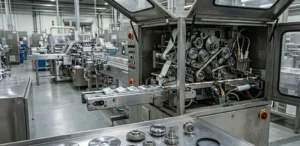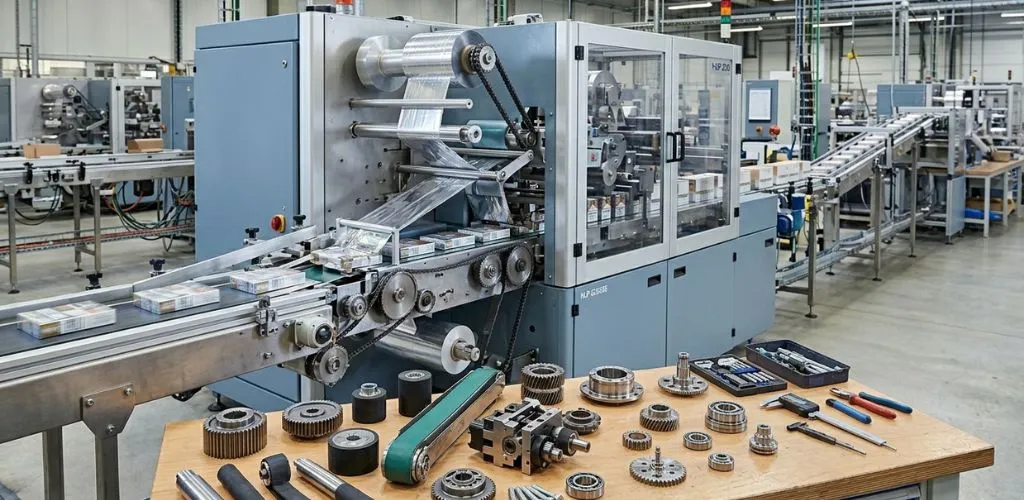
The Hauni HLP series, including the HLP 180, HLP 225, and HLP 250, represents one of the most established lines of cigarette packing machines in the global tobacco industry. These machines are engineered for high-speed, high-precision packaging, and they remain active in production facilities across the United States and worldwide. Keeping them operational requires a steady, reliable supply of compatible spare parts.
This guide addresses the key sourcing considerations for HLP spare parts, covering model differences, critical wear components, what separates a qualified supplier from a parts trader, and how US-based facilities can build a more resilient procurement approach.
Understanding the HLP Series: HLP 180, HLP 225, and HLP 250
Before sourcing any component, it is essential to identify the exact HLP model in your facility. The HLP series includes several variants, each with distinct mechanical configurations, packaging speeds, and component specifications. Parts are generally not interchangeable across models without verification.
| Feature | HLP 180 | HLP 225 | HLP 250 |
| Packs per Minute | Up to 180 ppm | Up to 225 ppm | Up to 250 ppm |
| Application | Standard hard-box packing | Mid-to-high speed packing | High-speed production lines |
| Wrapping System | Conventional foil & paper | Improved wrapping precision | Advanced multi-layer wrap |
| Glue System | Standard glue application | Enhanced glue control | High-precision glue system |
| Parts Interchangeability | Model-specific — verify before ordering | Model-specific — verify before ordering | Model-specific — verify before ordering |
Key Takeaway: Always confirm your exact HLP model variant before placing a parts order. A component listed as compatible with the HLP 225 may not fit the HLP 180 without modification. When in doubt, share your machine’s serial number or technical diagram with your supplier.
Critical Wear Parts on the HLP Packing Machine
The HLP operates through a tightly synchronized sequence of mechanical and pneumatic actions, cigarette feeding, foil wrapping, paper folding, gluing, and sealing — all performed at speeds exceeding 180 to 250 packs per minute. This constant high-speed cycling places significant stress on specific components, which must be monitored and replaced on a routine basis.
Below are the components that most commonly require replacement in HLP packing machines:
- 1st & 2nd Tucker: Responsible for folding the inner frame during pack formation. Worn tuckers cause misfolded packs and increased reject rates.
- Cigarette Turret: Rotates and positions cigarettes for insertion into the pack. Wear leads to misalignment, jams, and damaged product.
- Gummer Unit & Gummer Wheel: Applies adhesive at precise points during pack sealing. Degradation causes poor seal quality and pack failures.
- Cutter Creaser: Cuts and creases the foil or paper web. A dull or misaligned cutter creaser produces ragged edges and web breakages.
- Embossing Roller: Imprints foil texture during the wrapping stage. Surface wear affects pack appearance and foil adhesion.
- Glue Applicator & Air Type Glue Gun: Delivers controlled glue volumes to sealing points. Clogging or wear disrupts adhesive flow and seal integrity.
- Cigarette & Filter Detector: Monitors pack fill and filter orientation electronically. Faulty detectors cause good packs to be rejected or defective packs to pass.
- Blank Conveyor & Delivery Belt: Transports blanks and finished packs through the machine. Belt wear causes speed inconsistencies and positioning errors.
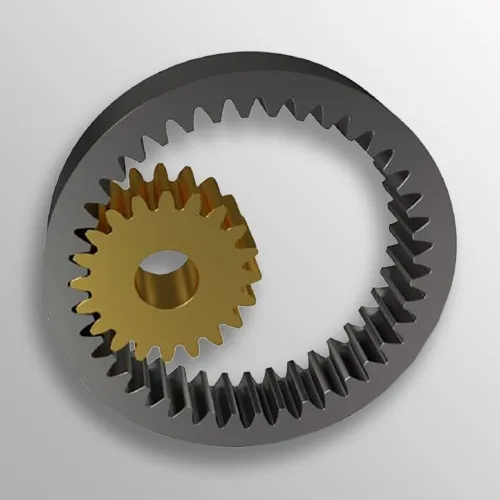
- Eccentric Bush: Converts rotary motion to linear action across several machine assemblies. Wear causes vibration, noise, and loss of timing precision.
- Filler Carriage & Filler Conveyor: Controls cigarette group formation before pack entry. Misalignment here directly impacts pack density and structure.
Browse the complete HLP spare parts catalog to check current availability on all components listed above.
Industrial Sourcing Considerations: What Procurement Teams Need to Evaluate
Sourcing spare parts for an industrial packing machine like the HLP is not the same as purchasing commodity components. The mechanical precision required, the high cycle rates involved, and the direct impact on product quality mean that component selection carries real operational risk. Here are the key considerations procurement teams should evaluate:
1. Manufacturing Origin vs. Trading
There is a meaningful difference between a supplier who manufactures HLP spare parts in-house and one who sources from multiple third-party vendors and resells. An in-house manufacturer controls material selection, machining tolerances, surface finishing, and quality inspection at every stage. A trading agent cannot offer that level of traceability. For critical components — such as the cigarette turret, eccentric bush, or cutter creaser, manufacturing origin directly affects how long the part lasts and how consistently it performs.
2. Dimensional Conformance and Tolerance Standards
HLP machines operate with tight synchronization across multiple assemblies. A replacement part that deviates even slightly from the original dimensional specification can cause timing issues, increased vibration, or premature wear on adjacent components. When requesting a quote, ask your supplier whether they verify dimensional conformance against original specifications and whether inspection records are available.
3. Material Grades for High-Cycle Applications
Components in the HLP undergo millions of cycles per shift. Parts such as the gummer wheel, embossing roller, and eccentric bush must be manufactured from materials that can sustain that load without deforming or cracking prematurely. Low-grade substitutes may appear identical but fail significantly sooner, resulting in higher total cost and more frequent downtime than a quality part would have caused.
4. Lead Time and Stock Availability
For unplanned stoppages, lead time is everything. A supplier who holds ready stock of common HLP 180 spare parts and HLP 225 spare parts can often ship within days rather than weeks. Before signing on with a supplier, confirm which items they hold in stock versus which are made-to-order. For a production line running 24 hours a day, the difference between a 3-day and a 3-week delivery can translate directly to significant revenue loss.
5. Custom and Diagram-Based Manufacturing
Some HLP components, particularly on older machine variants, may no longer be available through standard channels. In these cases, a supplier with in-house manufacturing capability can produce parts from technical drawings, sample components, or reverse-engineered measurements. Orchid’s Diagram to Spare Parts service is specifically designed for this situation, enabling manufacturers to source discontinued or hard-to-find HLP components without having to retire otherwise functional equipment.
Building a Maintenance Stock Strategy for HLP Lines
Reactive procurement, ordering parts only after a failure, is one of the most costly approaches a facility can take. A well-structured maintenance inventory for your HLP line should include forward stock of all high-wear components, particularly those with short replacement intervals such as delivery belts, gummer wheels, and filter detectors.
Orchid Spare Parts supports bulk and custom orders with competitive pricing for facilities looking to consolidate procurement. Stocking critical items in advance reduces per-unit cost, shortens response time during breakdowns, and simplifies the vendor management process. Our team can help you identify which components are highest priority based on your machine model and production schedule.
In addition to HLP parts, Orchid supplies components for the full range of cigarette packing machines, including the GD Packer and packing equipment from Hauni and Focke & Co, making it practical to consolidate multi-machine procurement through a single supplier.
HLP Spare Parts Sourcing Checklist
Use this checklist before committing to any HLP spare parts supplier:
- Confirm exact HLP model variant (HLP 180, 225, or 250) before requesting a quote
- Provide part reference number from the machine diagram if available
- Ask whether the supplier manufactures in-house or resells third-party components
- Request confirmation of dimensional conformance against original specifications
- Verify material grade for high-wear components (gummer wheel, eccentric bush, cutter creaser)
- Confirm whether the part is in ready stock or made-to-order, and the associated lead time
- Check whether custom or diagram-based manufacturing is available for discontinued parts
- Clarify international shipping terms, packaging standards, and delivery timelines for US orders