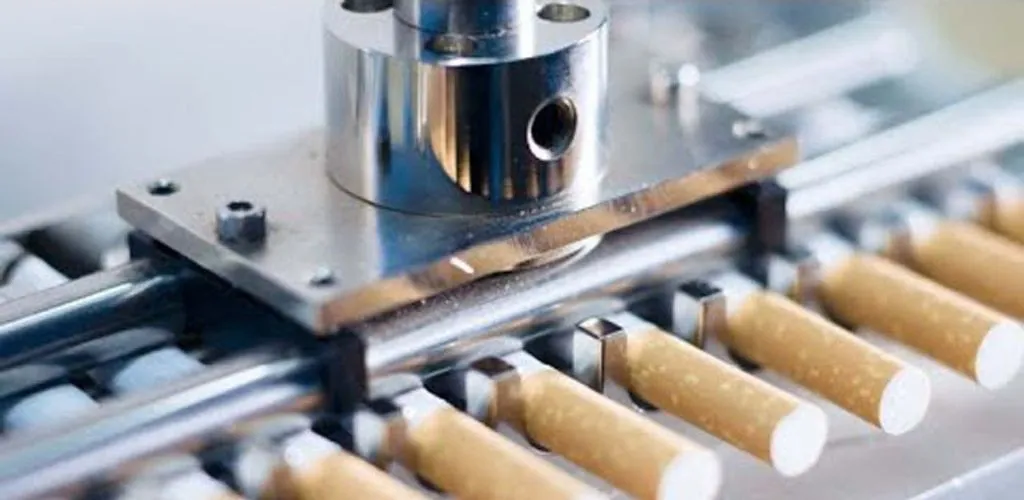
Sourcing spare parts for cigarette production line is not a simple procurement exercise. When a packing machine or a high-speed maker goes down, every hour of unplanned downtime translates directly into lost output, disrupted schedules and pressure from the top floor. The supplier you choose and how you choose them determines whether you recover in hours or days.
Large manufacturers operating machines from Hauni, Molins, GD and Focke are not looking for the cheapest quote on a parts marketplace. They are looking for a supplier they can build a long-term relationship with one that understands the operational demands of industrial tobacco manufacturing and can be relied upon when it matters most.
Below are the eight criteria that serious procurement teams use when evaluating a spare parts supplier for their production floor.
1. Production Capacity and Manufacturing Capability
There is a meaningful difference between a supplier that manufactures parts and one that simply trades them. A manufacturer with in-house production capability can control tolerances, maintain consistent quality across batches and respond to custom or non-standard requirements.
When evaluating a supplier, ask directly: do you manufacture these parts or source them from third parties? If they manufacture, ask about their production equipment, the materials they use and whether they can produce to drawing. If they are a trader, ask who their manufacturers are and what quality oversight they apply.
For critical components on high-speed lines, particularly parts for machines running at thousands of cigarettes per minute, manufacturing pedigree matters more than price.
2. Stock Depth and Parts Availability
A supplier quoting low prices on parts they do not hold in stock is a risk, not a saving. When a production line stops, the question is not what a part costs — it is how quickly it can be delivered.
Evaluate a supplier’s stock depth across the machine brands relevant to your operations. A credible supplier will hold stock across a range of platforms, not just the most common models. Ask specifically about availability for your machines and request confirmation of current stock levels before placing orders.
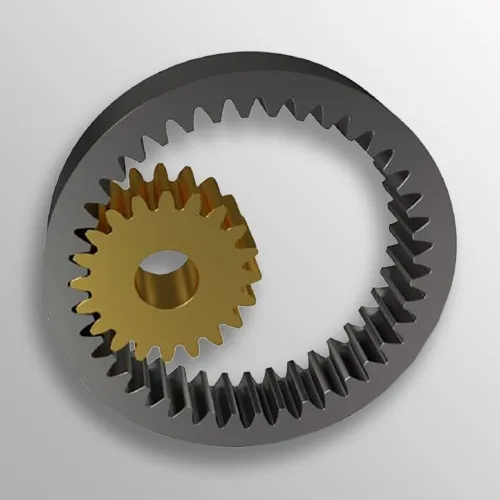
Orchid Spare Parts maintains an extensive spare parts stock covering cigarette manufacturing machines, packing machines, filter makers and rollers across all major brands — enabling fast response when production continuity is at risk.
3. Lead Time Guarantees
Lead time is one of the most consequential variables in spare parts procurement, yet it is often the least clearly defined in supplier conversations. Before approving a supplier, establish what lead times they can commit to, not in ideal conditions, but realistically, for parts that are in stock and parts that need to be manufactured.
Ask the following:
- What is the lead time for in-stock parts from order confirmation to dispatch?
- What is the lead time for custom or made-to-order parts?
- Do you offer emergency or priority dispatch for urgent requirements?
- How do you communicate delays when they occur?
A supplier unwilling or unable to answer these questions clearly is one that has not thought seriously about your production requirements.
4. Compatibility Track Record
Compatible parts, those manufactured to OEM specification by an independent supplier, represent a legitimate and often commercially sensible alternative to sourcing directly from the original equipment manufacturer. However, compatibility is not guaranteed simply because a supplier lists a part as compatible with your machine.
Ask for evidence: do they have documented cases of their parts performing successfully on the specific machine models you operate? Can they provide dimensional specifications or inspection reports to verify compatibility before you commit to a batch order?
For manufacturers running multiple machine platforms, a supplier’s compatibility track record across different brands is a meaningful indicator of their technical depth and market experience.
5. Quality Certifications and Process Standards
Quality in spare parts is not a marketing position, it is a manufacturing discipline. A credible supplier should be able to demonstrate their quality management process, not merely assert it. Ask for material certifications, inspection documentation and details of their production quality controls. Review their quality assurance approach before placing an initial order.
Relevant questions to ask a supplier:
- What materials do you use for high-wear components, and can you provide material certificates?
- Do you perform dimensional inspection on finished parts before dispatch?
- What is your rejection rate and how do you handle non-conforming parts internally?
- What documentation do you provide with each shipment?
A supplier with a mature quality process will answer these questions readily. One that cannot is likely relying on low price to compensate for inconsistent quality.
6. MOQ Flexibility
Large manufacturers running high-volume production lines typically need different things from their spare parts supplier at different times. For high-turnover consumables, bulk ordering makes commercial sense. For low-frequency replacement parts, those needed once or twice a year, forcing a minimum order quantity that creates excess stock is a cost with no operational benefit.
Evaluate whether a supplier offers flexible MOQs or whether their pricing structure forces bulk commitments on parts that do not warrant them. The ability to order what you need, when you need it, without being penalized commercially, is a mark of a supplier structured to serve manufacturers rather than simply move inventory.
7. Communication and Technical Support
In industrial spare parts procurement, the quality of communication between buyer and supplier is a direct indicator of how the relationship will perform under pressure. A supplier that responds slowly, provides vague answers or delegates all technical questions to a sales team is a supplier that will cost you time when a production issue requires rapid resolution.
Assess communication during the qualification process itself. How quickly do they respond to enquiries? Do their responses address your specific machine context or are they generic? Is there a technically knowledgeable contact you can reach directly when needed?
At Orchid Spare Parts, technical enquiries are handled directly by the team with deep knowledge of cigarette machinery platforms. Contact us to discuss your requirements.
8. Custom and Non-Standard Part Capability
For manufacturers operating older machine fleets or running non-standard configurations, the ability to source custom-manufactured parts is not a nice-to-have, it is a necessity. OEM support for legacy machines thins over time, and at some point, the only path to keeping production running is a supplier that can manufacture from a drawing, a sample or a technical specification.
Evaluate whether your supplier offers this capability. Orchid Spare Parts provides a diagram-to-spare-parts service that allows manufacturers to submit technical drawings and receive precision-manufactured components built to exact specification, a capability that becomes increasingly valuable as machine fleets age.
Building a Supplier Relationship That Protects Production
The eight criteria above are not a checklist to complete once during a tender process. They are the basis for an ongoing supplier relationship that earns trust over time through consistent performance. The best procurement teams treat spare parts supply as a strategic function, one that directly determines production reliability rather than a transactional cost to be minimised.
Orchid Spare Parts has been supplying industrial tobacco machinery spare parts to manufacturers across Africa, the Middle East, South Asia and beyond from our base in Dubai. Our combination of direct manufacturing capability, extensive stock, and rigorous quality standards means we are equipped to meet the demands of large-scale production environments.
To discuss your requirements or request a parts quotation, get in touch with our team. Alternatively, browse our full spare parts stock to see the range of machines and components we support.