The Cut-Off Knife in cigarette machine production is one of the most critical and highest-wear components in the entire rod formation process. Responsible for cutting the continuous tobacco rod into individual cigarettes at speeds of thousands of cuts per minute, the cut-off knife cigarette machine component operates under extreme mechanical stress — and when it wears out, the impact on cigarette quality is immediate and direct.
This guide explains exactly what the Cut-Off Knife is, how it works, why it wears out, the signs that it needs replacing, and how to source a quality replacement. For related component guides see our articles on Garniture Assembly, Suction Band, and Cigarette Rod Formation Problems.
What is Cut-Off Knife in Cigarette Machine?
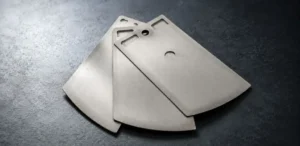
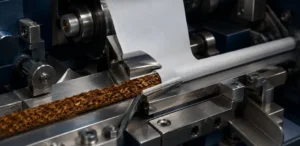
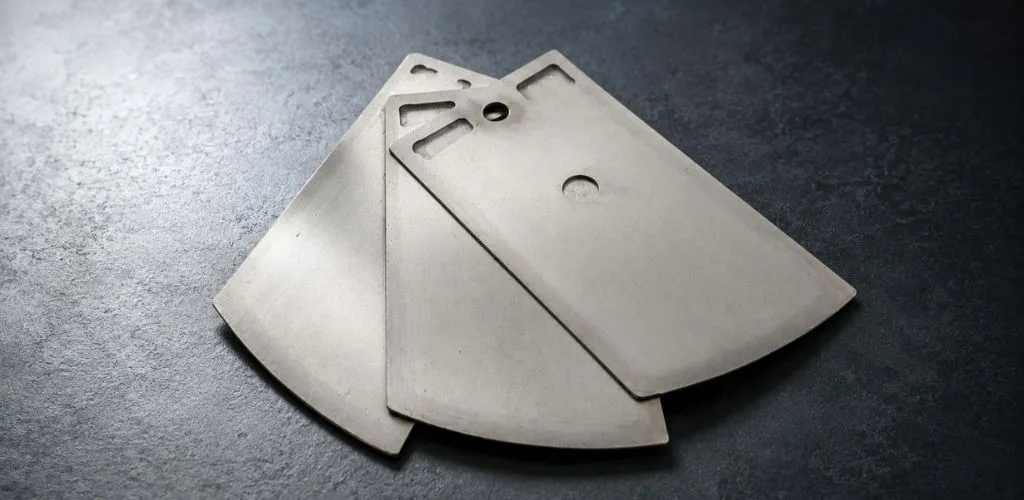
The Cut-Off Knife is a precision-ground rotary blade mounted at the cutting station of a cigarette making machine. Its sole function is to sever the continuous tobacco rod — formed by the garniture assembly — into individual cigarettes of the correct length. This cutting action happens at extremely high speed, synchronized precisely with the rod formation and transfer process to ensure every cigarette is cut at exactly the right point.
The cigarette machine cutting knife typically consists of a circular blade mounted on a rotating disc, which is driven by the machine’s main drive system. The blade makes contact with the moving tobacco rod at a precisely calculated angle and timing — producing a clean, straight cut across the paper and tobacco with minimal compression or distortion.
Because of the extremely high number of cuts performed per minute — on some machines exceeding 10,000 cuts per minute — the cut-off knife is one of the fastest-wearing components on any cigarette making machine. It requires regular inspection and replacement as part of any well-managed maintenance schedule.
How the Cut-Off Knife Works in the Cigarette Making Process
Understanding the role of the cut-off knife within the broader cigarette making process helps maintenance engineers diagnose problems accurately. Here is where the cut-off knife fits in the production sequence:
| Stage | What Happens |
| Rod Formation | The garniture assembly shapes the continuous tobacco rod — wrapping paper around the tobacco stream and sealing the seam with adhesive. |
| Rod Transfer | The continuous rod moves from the garniture assembly toward the cutting station at high speed. |
| Cutting | The cut-off knife severs the continuous rod into individual cigarettes at precisely timed intervals — synchronized with the machine’s main drive. |
| Transfer to Packing | Individual cigarettes are transferred by the flute drum to the packing machine or accumulation conveyor for further processing. |
Key Point: The cigarette rod cut quality at this stage directly determines the appearance, length consistency, and end quality of every finished cigarette. A sharp, correctly timed cut-off knife produces clean, straight ends. A worn or mistimed knife produces ragged, compressed, or uneven ends — which affects both product quality and downstream packing performance.
Which Cigarette Making Machines Use a Cut-Off Knife?
The cut-off knife is a standard component across all continuous-rod cigarette making machines. The most common machines include:
- Protos 70, 80, M5, M8 — Hauni / Körber
- Molins Mark 8 — Molins
- Molins Mark 9 — Molins
Important: Cut-off knife specifications — including blade diameter, thickness, and mounting configuration — differ between machine models and variants. Always confirm your exact machine model before ordering a replacement cut-off knife.
Why Does the Cut-Off Knife Wear Out?
The cut-off knife wears out faster than most components on a cigarette making machine because of the extreme number of cutting cycles it performs. Here are the main causes of cut-off knife wear:
1. High Cycle Wear
On a machine producing 10,000 cigarettes per minute, the cut-off knife performs 10,000 cuts every minute — 600,000 cuts per hour, and millions of cuts per shift. Even with hardened tool steel, this extreme cycle count causes gradual blade edge wear that dulls the cutting edge over time. This is the primary and unavoidable cause of cut-off knife wear — it is a consumable component by nature.
2. Abrasion from Paper and Tobacco
Each cut passes the blade through cigarette paper and compacted tobacco — both of which are mildly abrasive materials. The paper fibres and tobacco particles in contact with the blade edge contribute to micro-abrasion of the cutting surface over time, gradually rounding the blade edge and reducing cutting sharpness.
3. Incorrect Sharpening or Grinding
Some cigarette making machines include an in-built sharpening system that periodically re-grinds the cut-off knife blade during operation. If the sharpening disc is worn or the sharpening angle is incorrectly set, the knife edge will not be restored correctly — causing premature deterioration of cut quality even on a relatively new blade.
4. Incorrect Knife Timing or Gap Setting
If the cut-off knife timing is out of specification — meaning the blade contacts the rod at the wrong point in the machine cycle — the blade experiences additional stress and uneven loading during each cut. Over time this accelerates wear on specific areas of the blade edge and reduces the effective service life of the knife.
Cut-Off Knife Wear Signs: When Does It Need Replacing?
Maintenance engineers should watch for these cut-off knife wear signs during machine operation and routine inspection:
- Ragged or torn cut ends on cigarettes — The most direct indicator — if cigarette ends look torn, frayed, or compressed rather than cleanly cut, the blade edge has dulled beyond acceptable tolerance.
- Tobacco falling from cut ends — Loose tobacco at the cut end indicates the blade is dragging through the tobacco rather than cutting cleanly — a clear sign of blade dulling.
- Increased cut end length variation — If cigarette lengths become inconsistent across the production run, the knife timing or blade condition has deteriorated.
- Paper fibres visible at the cut edge — Fine paper fibres or threads at the cut end indicate the blade is tearing rather than cutting the paper — a sign of significant edge wear.
- Increased reject rate from cut quality inspection — If the machine’s quality inspection systems are rejecting cigarettes for end quality defects at a higher than normal rate, the cut-off knife condition should be checked immediately.
How a Worn Cut-Off Knife Affects Cigarette Quality
The cigarette rod cut quality produced by the cut-off knife affects multiple cigarette quality parameters simultaneously:
| Quality Parameter | Effect of Worn Knife | Production Impact |
| Cut End Appearance | Ragged, torn, or compressed ends | Increased visual rejects |
| Cigarette Length | Length variation at cut points | Out-of-spec length triggers rejection |
| Tobacco Loss | Loose tobacco falls from cut ends | Weight variation, waste increase |
| Paper Integrity | Paper tears rather than cuts cleanly | Seam damage, structural weakness |
| Packing Performance | Irregular ends cause packing issues downstream | Packing rejects increase |
How Often to Replace Cut-Off Knife: Practical Guidance
There is no single universal answer to how often to replace cut-off knife components — the replacement interval depends on machine speed, production volume, tobacco blend characteristics, paper type, and whether the machine has an in-built sharpening system. However the following practical guidelines apply to most cigarette making machine operations:
- Inspect cut end quality at the start of every production shift — this takes seconds and gives an immediate indication of knife condition
- Replace the knife at the first sign of cut quality deterioration — do not wait for the problem to worsen
- On machines without in-built sharpening, replacement intervals are typically shorter than on machines with sharpening systems
- Maintain at least one spare cut-off knife in stock at all times — it is a consumable item with a predictable service life
- After knife replacement, verify timing and gap settings against machine specification before resuming full production speed
How to Source a Replacement Cut-Off Knife
Cut-off knife replacement is one of the most frequent spare parts purchases on any cigarette making machine. Because of this, the quality and consistency of the replacement blade has a direct and continuous impact on your production output. Here is what to verify before ordering:
- Confirm your exact machine model — cut-off knife specifications differ between Protos variants, Mark 8, and Mark 9
- Verify the blade material — cut-off knives should be manufactured from appropriate hardened tool steel for the application
- Ask whether the supplier manufactures in-house — a reseller cannot guarantee consistent blade hardness or edge geometry across batches
- Confirm dimensional conformance against original blade specifications — diameter, thickness, and edge angle must be correct
- Stock multiple replacement knives in advance — this is a consumable item with a predictable and relatively short replacement cycle
Orchid Spare Parts manufactures cut-off knives for all major cigarette making machines including the Protos, Molins Mark 8, and Molins Mark 9. As a consumable high-wear item, cut-off knives are well-suited for bulk ordering — reducing per-unit cost and ensuring you always have stock available when needed.
Related Components to Inspect When Replacing the Cut-Off Knife
When replacing the cut-off knife, inspect these related components at the same time:
- Garniture Assembly — A worn garniture produces irregular rod density — which increases the mechanical load on the cut-off knife and accelerates blade wear. If knife wear is unusually fast, check the garniture condition.
- Suction Bands — Inconsistent tobacco delivery from a worn suction band causes density variations in the rod — creating uneven cutting resistance that contributes to blade wear.
- Garniture Tapes — Worn garniture tapes affect rod formation quality upstream of the cutting station — indirectly affecting cut quality and knife performance.
For a complete overview of how these components work together and what happens when they wear, read our guides on What is Garniture Assembly, What is Suction Band, and Cigarette Rod Formation Problems.