Hauni machines have defined industrial cigarette manufacturing for decades. From the high-speed Protos cigarette making platforms to the KDF filter rod making machines and the MAX series, Hauni equipment has been the production backbone for major tobacco manufacturers across every major market. The engineering pedigree is well established. So is the challenge of keeping those machines running when OEM spare parts supply becomes unreliable, expensive or simply unavailable.
For procurement and operations teams managing Hauni-equipped production lines, the question of sourcing parts outside the OEM channel is not hypothetical. It is an operational reality that many facilities are already navigating, and one that requires a clear-headed approach to supplier qualification, quality standards and compatibility verification.
This article sets out what manufacturers need to know before making that transition, and what to demand from any supplier positioning themselves as a credible alternative to the Hauni OEM supply chain.
Why Manufacturers Are Looking Beyond the Hauni OEM Channel
The case for going beyond OEM supply is not built on dissatisfaction with Hauni engineering. It is built on the commercial and logistical realities of OEM spare parts procurement at scale.
Lead times through the OEM channel for certain Hauni components, particularly for older machine variants or less common sub-assemblies, can extend to several weeks. For a production facility running at capacity, a three- or four-week wait for a replacement part is not an acceptable operational position. The cost of that downtime, measured against the price differential between OEM and compatible parts, makes the commercial case for alternative sourcing straightforward.
Price escalation on legacy parts is a compounding factor. As Hauni machine platforms age, the Protos 70 and 80 series, the MAX 3 and MAX 5, the earlier KDF variants, OEM pricing on replacement parts has not tracked downward with reduced demand. In some cases, it has moved in the opposite direction, as the commercial value of being the last available source increases.
And for manufacturers running Hauni machines that are now beyond the horizon of active OEM support, the question is not which channel to use, it is whether compatible parts from a qualified independent manufacturer are the only viable path to continued production.
The Hauni Machine Families and Their Parts Landscape
Understanding the Hauni parts landscape starts with the machine families themselves. The Hauni spare parts ecosystem covers several distinct platforms, each with its own parts architecture:
Protos serie: cigarette making machines
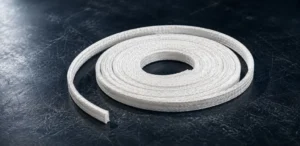
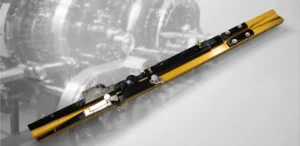
The Protos 70, 80 and 90 are among the most widely operated cigarette making machines globally. The Protos spare parts range covers a broad spectrum of components, from garniture tapes and suction bands to cutting unit components, glue systems and drive elements. These are high-turnover parts on active production lines, and lead time performance from the supplier matters acutely.
MAX series: high-speed cigarette makers
The MAX 3, MAX 5, MAX 15 and MAX S represent the higher-speed end of the Hauni making machine range. Parts for these platforms are in active demand from manufacturers running large-volume production lines. The specification requirements are exacting, high-speed operation leaves no margin for dimensional variance or material inconsistency in replacement components.
KDF series: filter rod making machines
The KDF-1 and KDF-2 are the dominant Hauni platforms in the cigarette filter maker segment. Filter making imposes its own specific demands on spare parts, particularly around tow opening, garniture and cutting systems, and a supplier covering this platform needs demonstrated familiarity with the precision requirements involved.
What a Non-OEM Hauni Parts Supplier Must Demonstrate
The threshold for approving a non-OEM supplier for Hauni parts on an industrial production line is high, and rightly so. The machines operate at speeds and under conditions where a substandard component does not just underperform; it can cause secondary damage, production waste and unplanned downtime that costs far more than the part itself.
The following are the non-negotiable requirements a qualified independent Hauni parts supplier should be able to demonstrate:
Direct manufacturing capability
The supplier must manufacture the parts themselves, not source them from unverified third parties. This is the foundation of everything else. Only a direct manufacturer can provide material certifications from their own production records, investigate a quality issue at its source and implement a corrective action that will prevent recurrence.
Ask directly: which of these Hauni parts do you manufacture in your own facility? The answer will quickly establish whether you are dealing with a manufacturer or a trading agent dressed in manufacturer’s language.
Platform-specific technical knowledge
A supplier credible for Hauni parts should be able to speak with specificity about the machines, which Protos variant a given component is designed for, how specification differs between MAX generations, what the dimensional criticality is for a particular component in the cutting or garniture system. Generic product knowledge is not sufficient. Platform-specific knowledge is the baseline.
Material standards and certification
High-wear components on Hauni machines, suction bands, garniture tapes, cutting elements, rollers, are subject to significant operational stress. The materials used in their manufacture determine how long they last and how predictably they perform. A qualified supplier should be able to provide material certifications for these components, identifying the grades used and confirming they meet the specification requirements for the relevant machine platform.
Compatibility evidence across model variants
The Hauni range spans multiple generations of each platform, and part specifications are not always consistent across those generations. A supplier who can confirm compatibility for a Protos 70 but cannot distinguish the specification differences for a Protos 80 or 90 is one whose compatibility claims should be scrutinized before any order is placed.
Ask for documented evidence of their parts performing on the specific Protos, MAX or KDF variant you operate. A credible supplier will have this. One who cannot provide it is one whose compatibility claims are based on catalogue listings rather than verified performance.
Quality Benchmarks to Apply to Hauni-Compatible Parts
When evaluating compatible Hauni parts, the quality benchmark is not ‘does it fit’, it is ‘does it perform to specification under the operating conditions of the machine’. Those are meaningfully different standards.
A part that installs correctly but fails at 60 percent of the OEM service life is not a quality alternative, it is a disruption cycle that costs more in the long run than the OEM price premium would have. The quality evaluation for compatible parts should be based on:
- Dimensional conformance: verified against specification, not just visually matched to a sample
- Material grade: confirmed against the documented requirements for the component’s operating conditions
- Surface finish and treatment: relevant for components in contact with tobacco rod, paper or film
- Service life: does the supplier have data or references to support a performance claim that is comparable to OEM?
- Consistency across batches: a single good sample does not establish consistent quality, ask about batch-to-batch variation and quality controls
At Orchid Spare Parts, our quality assurance process covers each of these dimensions. Parts are produced under controlled manufacturing conditions with material certification and dimensional inspection as standard elements of every production run.
Handling Discontinued and Non-Standard Hauni Parts
For manufacturers running older Hauni platforms, the earlier Protos variants, the MAX 3 or MAX 5, KDF machines from the first generation, OEM support has thinned to the point where certain parts are no longer available through standard channels. This is the scenario that makes a supplier’s custom manufacturing capability directly relevant to production continuity.
Orchid’s diagram-to-spare-parts service allows manufacturers to submit a technical drawing, dimensional specification or physical sample of a non-standard or discontinued Hauni component for feasibility assessment and quotation. This capability extends the operational life of older Hauni equipment beyond what OEM support availability would otherwise permit.
For procurement teams managing a mixed fleet that includes both current and legacy Hauni machines, this is a meaningful practical advantage, a single supplier relationship that covers both standard in-catalogue parts and custom manufacturing for components that have moved beyond the OEM support horizon.
Building the Supplier Relationship for Hauni Parts
The most operationally resilient approach to Hauni parts sourcing is not a single-supplier strategy, OEM or independent. It is a qualified supplier base that provides genuine redundancy: the OEM channel for situations where it performs well commercially and logistically, and a qualified independent manufacturer for situations where it does not.
Building that independent supplier relationship takes time and discipline, the qualification process, the trial orders, the incoming inspections, the documentation review. But that investment is made once. The benefit, a supply chain that is not entirely dependent on OEM lead times, OEM pricing and OEM support decisions, is ongoing.
Orchid Spare Parts: Hauni Parts From a Direct Manufacturer in Dubai
Orchid Spare Parts manufactures compatible spare parts for the full range of Hauni machines, including Protos, MAX and KDF platforms, from our manufacturing facility in Dubai. Our parts are produced using high-grade materials with documented quality controls, and our team has the platform-specific technical knowledge to support your qualification process from the first conversation.
We also supply compatible parts for cigarette packing machines and cigarette manufacturing machines across all major brands, so manufacturers running multi-brand production floors can consolidate their independent supplier relationships.
To discuss your Hauni parts requirements, request documentation or begin the qualification process, contact our team or browse our full spare parts stock.