For decades, the default position in tobacco manufacturing was straightforward: source spare parts from the original equipment manufacturer. OEM parts were trusted because they came with an implicit guarantee, the same company that built the machine supplied the part. Procurement teams accepted the price premium, the long lead times and the limited flexibility because the alternative felt like an unnecessary risk.
That position is changing. Across large-scale cigarette and tobacco production facilities, from Southeast Asia to Africa to the Middle East, procurement and operations leaders are actively diversifying their parts sourcing strategy. OEM supply remains part of the picture, but it is no longer the whole picture.
This shift is not driven by cost pressure alone. It reflects a broader reckoning with the real-world limitations of exclusive OEM dependency and the maturity of the independent spare parts manufacturing sector.
The OEM Dependency Problem in Practice
The case for OEM exclusivity was always strongest when OEM supply was reliable, responsive and commercially reasonable. In practice, for many manufacturers, it has become less of all three.
Lead times from OEM suppliers for certain components can run to several weeks or longer, particularly for parts that are not held in local stock and must be ordered from a central warehouse or manufactured on demand. For a production facility running multiple lines at high speed, waiting weeks for a replacement component is not an operational reality, it is a production crisis.
The commercial terms have also shifted. As tobacco machinery platforms age, and machines from Hauni, Molins and GD continue to operate in factories long past their original design horizons, OEM pricing on replacement parts tends to increase, not decrease. The supply of legacy parts is not a priority for OEM commercial teams focused on new equipment sales.
And then there is the most acute problem: discontinuation. OEM suppliers eventually phase out support for older machine models. When that happens, the factory running that machine faces a binary choice, pay whatever is asked in the secondary market or find an alternative source.
What Has Changed on the Independent Supplier Side
The growth of independent spare parts manufacturing for tobacco machinery is not a recent development, but the quality and capability of the sector have improved substantially. The best independent manufacturers today operate with precision engineering capabilities, documented quality management systems and deep familiarity with the machine platforms their parts are designed to serve.
This matters because the objection to compatible parts has never been purely about cost or convenience, it has always been about risk. Will the part perform to specification? Will it hold up under the operational demands of a high-speed production line? Will it create secondary problems downstream?
These are legitimate questions, and the answer depends entirely on the supplier. A compatible part from a supplier with robust manufacturing controls, material certifications and a track record on your specific machines is a fundamentally different proposition from a part sourced from an unverified distributor on the basis of a low price.
This is the distinction that serious procurement teams are now drawing, not between OEM and non-OEM as categories, but between suppliers with demonstrated quality capability and those without.
The Five Reasons Manufacturers Are Diversifying
The move away from OEM-only sourcing is rarely a single decision. It is typically the result of several converging pressures:
Lead time failures on critical parts. A single instance of a production line stopped for three days waiting for an OEM part that could have been sourced locally within 24 hours is often the catalyst for a procurement policy review. Once operations and procurement teams have quantified the cost of that event, the risk calculus changes.
OEM price increases on legacy parts. As machines age out of active OEM support, the pricing on remaining parts becomes increasingly disconnected from manufacturing cost. Independent suppliers manufacturing to the same specification offer a commercially rational alternative.
Discontinuation of parts for older machines. This is the scenario that makes OEM exclusivity structurally untenable. When a part is no longer available from the OEM, there is no choice — the manufacturer must find an independent source or manufacture to specification. Suppliers capable of producing from a drawing or sample become essential partners.
Multi-brand fleet complexity. Large production facilities often operate machines from several different brands simultaneously, Hauni, Focke, Korber and others on the same floor. Managing separate OEM relationships for each brand adds procurement overhead. A single independent supplier with genuine cross-brand capability consolidates that complexity.
Supply chain resilience. The disruptions of recent years have sharpened focus on single-source dependency as a supply chain risk. Approved vendor lists that previously included only the OEM are being expanded to include qualified independent suppliers as a deliberate resilience measure.
What to Demand From an Independent Supplier
Moving beyond OEM exclusivity does not mean accepting reduced standards. It means applying the same rigor to qualifying an independent supplier that you would apply to any critical supply relationship. The standards that matter are the same, they simply need to be verified rather than assumed.
Before approving an independent supplier for your production floor, establish the following:
- Manufacturing capability: do they produce the parts themselves, or source from unverified third parties?
- Material standards: can they provide material certifications for the grades used in high-wear components?
- Compatibility evidence: do they have a documented track record of their parts performing on your specific machine models?
- Quality documentation: do they provide inspection reports or dimensional verification with each shipment?
- Lead time commitments: can they confirm realistic lead times for both stocked and made-to-order parts?
- Custom capability: if a part is discontinued or non-standard, can they manufacture from a diagram or sample?
A supplier that meets these criteria is not a compromise, it is a qualified partner.
The Role of Compatible Parts in a Balanced Sourcing Strategy
The most operationally resilient tobacco manufacturers do not operate on a binary. They maintain OEM relationships where OEM supply is reliable and commercially reasonable, while qualifying independent suppliers for parts where lead time, price or availability make the OEM channel impractical.
This balanced approach requires more upfront work, qualifying additional suppliers, maintaining documentation and managing a slightly more complex approved vendor list, but it delivers a supply chain that is materially less vulnerable to the disruptions that exclusive OEM dependency creates.
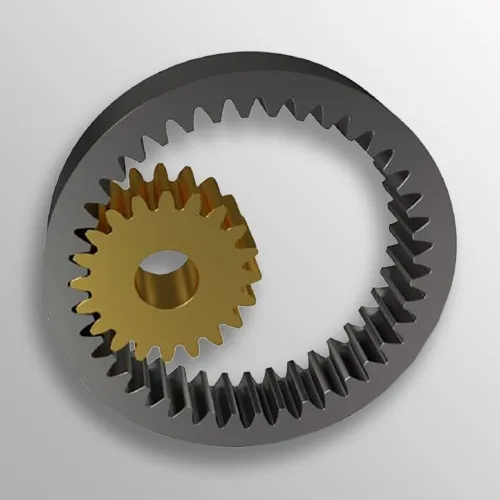
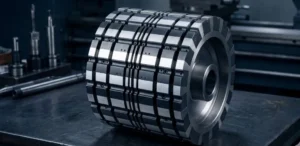
Orchid Spare Parts manufactures and supplies compatible spare parts for cigarette manufacturing machines, packing machines and filter makers across all major brands. Our parts are produced using high-grade materials under controlled manufacturing conditions, with quality documentation provided as standard.
For Parts That Are No Longer Available From the OEM
For manufacturers dealing with discontinued or non-standard parts, Orchid offers a diagram-to-spare-parts service, submitting a technical drawing, sample component or dimensional specification is sufficient for us to assess feasibility and provide a quotation. This capability is particularly relevant for manufacturers running older Molins Mark 8 and Mark 9 machines, or any platform where OEM support has thinned.
The Bottom Line
The move away from OEM-only sourcing is not a race to the bottom on parts quality. It is a maturation of procurement strategy in response to the real-world limitations of exclusive dependency, limitations that have become harder to ignore as lead times lengthen, prices rise and legacy machine support diminishes.
The question is not whether to source compatible parts, but how to do it with the same discipline applied to any critical supply decision: rigorous supplier qualification, clear quality standards and documented performance expectations.
To discuss your requirements or explore whether Orchid Spare Parts is the right partner for your production floor, contact our team. You can also review our quality assurance process and browse our full spare parts stock.