When a procurement team begins shortlisting spare parts suppliers for a cigarette production facility, they are rarely comparing like with like. The market includes direct manufacturers, specialist stockists, regional distributors and general trading agents and from the outside, they can be difficult to distinguish. Websites look professional. Product lists look comprehensive. Pricing looks competitive.
The differences surface later, when a part arrives out of tolerance, when a delivery is delayed by four weeks because the ‘supplier’ was waiting on their own supplier, or when a quality issue cannot be resolved because nobody in the chain actually manufactured the component and nobody can explain why it failed.
For industrial tobacco manufacturers, understanding the structure of the spare parts supply chain, and knowing how to identify where in that chain a prospective supplier actually sits, is a prerequisite for sound procurement decisions.
The Three Types of Suppliers You Will Encounter
The spare parts market for industrial tobacco machinery broadly contains three types of suppliers. They are not always easy to distinguish from public-facing communications, but they operate very differently.
Direct manufacturers
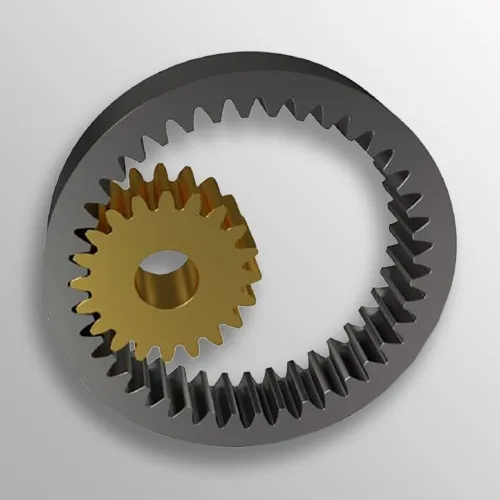
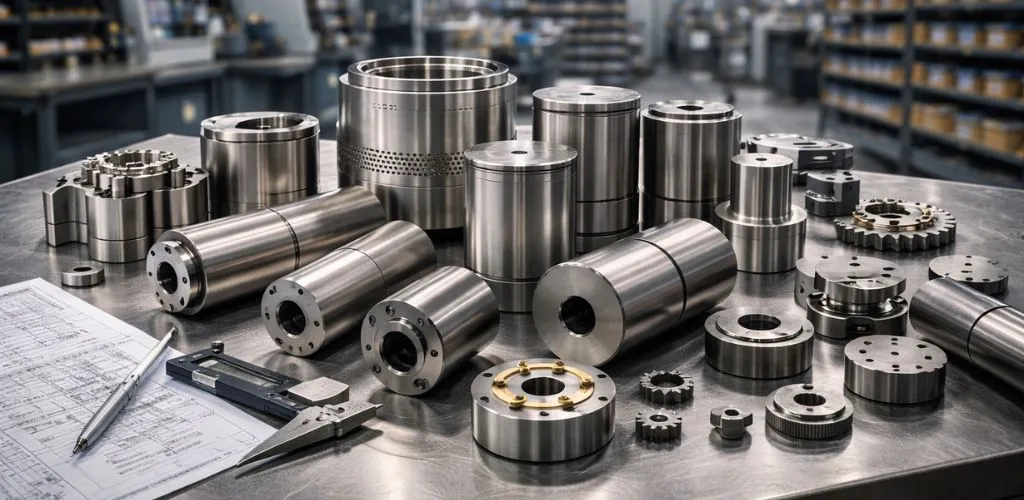
A direct manufacturer produces the parts themselves. They own or operate machining, finishing and quality control facilities. When you place an order, the part is produced in their facility using their materials and their processes. They can answer technical questions directly, provide material certifications from their own stock and take accountability for dimensional accuracy and performance.
When a quality issue arises, a manufacturer can investigate it at the source, examining the machine setup, the material batch, the inspection records. They can implement a corrective action. They have skin in the game because the part is theirs.
Specialist stockists
A specialist stockist holds inventory from one or more manufacturers. They may not manufacture anything themselves, but they have established sourcing relationships with vetted producers, they understand the technical requirements of the parts they hold and they can provide documentation and traceability back to the source.
A good specialist stockist adds value through availability and logistics, keeping stock that reduces lead times for buyers and managing the supplier relationships that underpin their inventory quality. The key question for a stockist is: who made the parts you hold, and what documentation do you have for them?
Trading agents
A trading agent operates as an intermediary with no fixed supply chain. They source to order, placing enquiries with multiple potential suppliers each time a buyer request comes in. They have no manufacturing capability, often no stock and no established relationship with the entities that ultimately produce what they sell.
The trading agent model is not inherently fraudulent, but it introduces risk that is structurally invisible to the buyer. Quality depends entirely on who the agent happened to source from this time. Lead times depend on a supply chain the buyer cannot see. When something goes wrong, accountability is diffuse, the agent points to their supplier, the supplier points elsewhere.
Why the Distinction Matters on a Production Floor
For procurement teams managing the supply of parts to a casual or low-speed operation, the supplier structure matters less. For industrial tobacco manufacturers running high-speed cigarette making machines or packing lines at production rates measured in thousands of units per minute, the supplier structure is directly relevant to production risk.
Consider what happens when a part fails on a Protos or Mark 9 line mid-shift. The immediate question is replacement availability. But the underlying question, the one that determines whether this happens again next month, is why the part failed. Was it a material issue? A dimensional variance? An incorrect specification? Only a supplier with manufacturing visibility can answer that question with any authority.
A trading agent cannot. They can offer a refund or a replacement, but they cannot tell you why the part failed because they do not know who made it or under what conditions. That absence of traceability is a production risk, not just a procurement inconvenience.
Questions That Reveal Supplier Structure
The most effective way to establish where a supplier sits in the supply chain is to ask direct questions early in the relationship. A manufacturer will answer these comfortably. A trading agent will deflect, generalize or simply be unable to answer.
- Do you manufacture these parts in your own facility, or do you source them from third-party producers?
- Can you provide material certifications for the grades used in your high-wear components?
- If a part fails in service, who investigates the root cause, and what is your corrective action process?
- What is your lead time from order confirmation to dispatch for parts that are currently in stock?
- Can you manufacture to drawing or sample for parts that are not in your standard catalogue?
- What documentation do you provide with each shipment?
The answers to these questions will quickly clarify the structure of the supplier you are dealing with. A direct manufacturer answers them with specificity. A stockist answers most of them and is transparent about the sourcing of their inventory. A trading agent struggles to answer any of them consistently.
The Accountability Gap in Trading Agent Supply Chains
The accountability gap is the most consequential operational risk in sourcing from trading agents, and the most difficult to quantify until something goes wrong.
When a part sourced through a trading agent fails in service, the buyer has a commercial claim but no technical recourse. The agent has no manufacturing records to examine, no process documentation to review, no way to confirm whether the next batch will be any different. The buyer is left choosing between accepting the situation and continuing to source from the same opaque supply chain, or starting a supplier qualification process from scratch at a moment when production pressure is highest.
By contrast, a direct manufacturer carries technical accountability that extends beyond the commercial transaction. A supplier like Orchid Spare Parts, which manufactures components for Hauni, Molins, GD, Focke and Korber machines in its own production facility, can trace every part back to its material source, production batch and inspection record. That traceability is what makes quality accountability meaningful.
Stock Availability: Another Dimension of the Difference
Beyond quality and accountability, stock availability reveals the difference between a manufacturer or serious stockist and a trading agent in the most immediate way.
A manufacturer or specialist stockist holds inventory. When you need a part urgently, they can confirm availability, commit to a dispatch date and ship from their own facility. A trading agent holds nothing, when you place an urgent order, they begin sourcing, which means your urgency is passed down a supply chain you cannot see, with lead times you cannot control.
Orchid Spare Parts maintains a broad spare parts stock across all major machine brands and types, including cigarette filter makers and cigarette rollers, so that when a production facility needs a part quickly, we can respond without introducing a sourcing delay at our end.
When Custom Manufacturing Capability Is the Deciding Factor
For manufacturers running older machine fleets or dealing with parts that are no longer available through standard channels, the ability of a supplier to manufacture from a drawing or sample is not a secondary consideration, it is often the primary one. This capability exists only with direct manufacturers.
Trading agents cannot manufacture. Stockists without manufacturing relationships cannot manufacture. Only a supplier with in-house production capability, or a direct, documented relationship with a manufacturer, can take a technical drawing and return a precision-made component that fits and performs correctly.
Orchid’s diagram-to-spare-parts service exists specifically to serve manufacturers in this position. Submitting a drawing, sample or dimensional specification is the starting point for a custom manufacturing conversation, one that a trading agent simply cannot have.
Making the Right Call During Supplier Qualification
The practical implication of everything above is straightforward: during supplier qualification, establish supplier structure before evaluating anything else. Price, lead time and product range are all secondary to the fundamental question of whether the entity you are dealing with actually manufactures what they are selling you.
A supplier that is transparent about their structure, that clearly describes their manufacturing capability, their quality processes and the basis of their inventory, is one that has nothing to hide. A supplier that is evasive on these questions, or that answers with marketing language rather than operational specifics, is one that warrants further scrutiny before any production-critical orders are placed.
To understand how Orchid Spare Parts operates as a direct manufacturer and what that means for your supply chain, visit our quality assurance page or contact our team directly. We are equipped to answer every question on this list, because we manufacture the parts ourselves.